3D Product Visualisation for Online Shops

This platform started out as NextComm.io and has become part of RAVE SPACE. As a service it is now called 3D product visualisation, and everything described below can be commissioned there.
The platform brings 3D product visualisation, virtual showrooms and augmented reality into existing e-commerce systems. Customers see a product from every side and at real size in their own room before they order.
What the platform does
The platform presents physical products as photorealistic 3D models and in virtual showrooms, and embeds them into existing e-commerce websites. Customers can study a product in detail and place it in their own room through AR.
It is aimed at brands that want more than a product photo. Products stand in a virtual space, and the sales team can join in real time.
The building blocks
3D Product Visualization: We provide photorealistic 3D models of physical products that can be fully embedded into online shops. These models are highly detailed and offer a 360° view, allowing customers to examine every aspect of a product. Customers can rotate the models, zoom in, and even customize various colors or materials to create a personalized product.
Example: A furniture company can create a 3D model of a chair that potential buyers can view in 360° and customize the upholstery color or material.
Video Link: See 3D visualization in action.
.jpg)
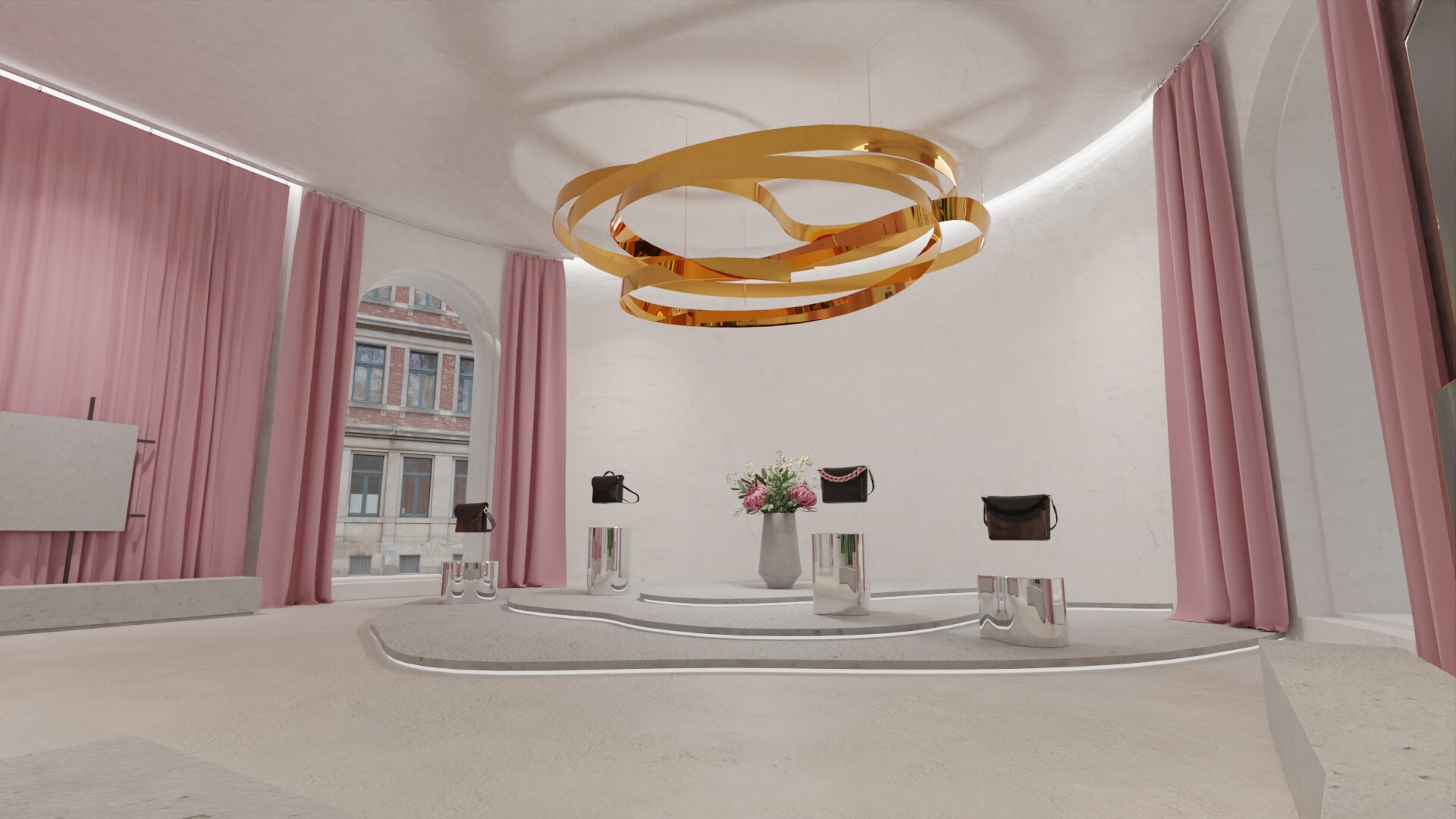
Virtual Showrooms: The platform enables businesses to digitize their physical showrooms and integrate them into their online stores. A virtual showroom simulates the ambiance of a physical store and allows customers to navigate the space, view products, and enjoy interactive experiences.
Example: A luxury fashion brand could have custom 3D models of its handbags and accessories created for interactive display online.
Eeva Ria Virtual Store Link: Virtual showroom demo.
Augmented Reality (AR): With AR functionality, customers can view products directly in their real-world environment. This feature enables customers to virtually place a new sofa in their living room or try out other products before making a purchase. The best part? This feature requires no additional apps or software. It works directly through the browser by scanning a QR code or clicking a link.
Example: An electronics retailer could allow customers to virtually place a TV or sound system in their living room to see how it looks and fits in the space.
Video Link: AR demo here.
.jpg)
3D Model Creation: Businesses can either access existing 3D models from the library or have custom models created for their products. These models are web-optimized for fast display without weighing on page load. Models can be created from existing 3D data, photos, or videos.
Example: A High End Bicycle Brand could have a custom 3D model of its latest product created for interactive display online.
Video Link: See 3D model creation in action.
.jpg)
Multiplayer Interactions and Voice Chat: One of the strongest features is the ability to interact with customers in real-time. Businesses can speak directly to their customers via voice chat, guide them through the product, answer questions, and engage in personalized sales conversations, just as if the customer were in a physical store.
Example: A high-end electronics retailer could provide potential buyers with interactive consultations via voice chat in a virtual showroom.
Video Link: Live interaction in the showroom.
.jpg)
Personalized Shopping Experiences through 3D Configurators: The platform also offers 3D configurators, so customers can put together their own version of a product and see it before ordering.
Example: A company that sells personalized gifts could allow customers to design jewelry in 3D and add custom engravings.
What it delivers
Increased Customer Engagement: Through immersive experiences such as 3D product visualization and AR, customers spend more time on a website and interact more deeply with products. This not only increases dwell time but also strengthens the emotional connection to the products.
Boosted Sales: AR and 3D product visualization let customers see a realistic, detailed view of a product before they buy. That confidence makes a purchase more likely.
Reduced Returns: Thanks to realistic visualizations, customers can examine a product closely before buying. They know what to expect, which means fewer returns and higher satisfaction.
Cost Savings: Businesses can significantly reduce costs for physical product samples and photoshoots as high-quality 3D models and digital showrooms take over these tasks.
Integration: The 3D models and virtual showrooms can be easily integrated into existing e-commerce systems and websites. They are also cross-platform compatible, working on all major devices, including smartphones, without requiring additional software.
Conclusion
3D visualisation, virtual showrooms and AR sit in one system that connects to the shop. Fashion, electronics, furniture or luxury goods: the setup is adapted per category.
Photorealistic 3D models, configurators, real-time customer contact and AR all come from one integration into the shop.
Planning something similar?
Tell us briefly what you have in mind. You get an assessment of whether and how it can be done within 24 hours.
Start a project

